
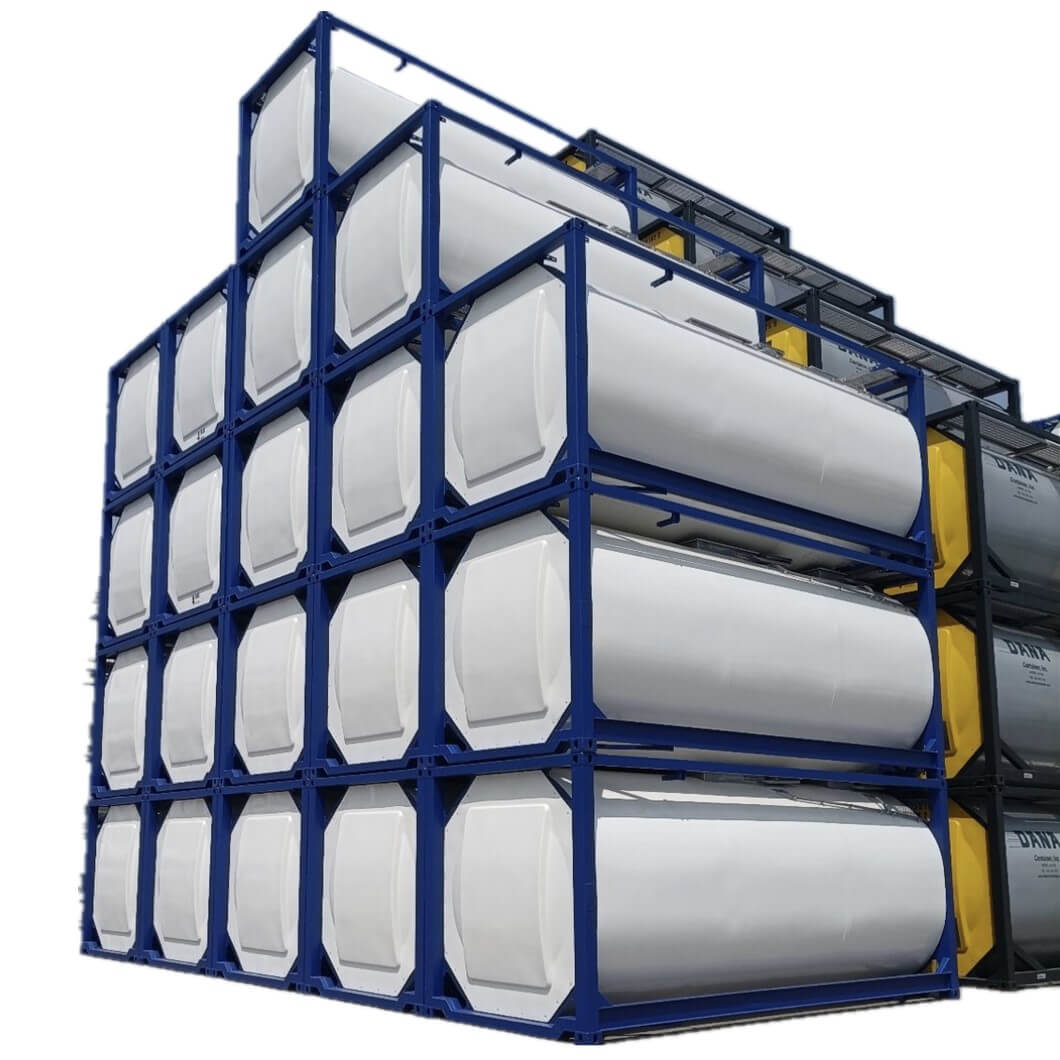
KSC900L
Keystone Vessel,KS Vessel,KUNSHI Vessel
UN,ASME
200L
316LV/316LVV,C257,304,TI2 ( EP,Ra0.07-0.25um)
UN1859 SiHF3 Trifluorosilane Gas
UN1859 SiHF3
7311009000
| Availability: | |
|---|---|
| Quantity: | |
IMDG 900L Large Specialty F3HSi Trifluorosilane Gas Cylinders for UN1859 SiHF3
Product Model :KSC900L
Material:S31603/SA240M 316L
Volume:900L
Operating Temperature:-40~60℃
Certification Medium:Trifluorosilane UN1859 SiHF3
Optional Certificate:TS
Work Pressure:0.5 MPa @ 60°C
Helium Leak Detection Rate:≤1X10⁻⁷pa.m³/s
Polishing Grade:EP,Ra0.07-0.25um
Product Description:Standard Operating Procedure is TSG 21-2016、 GB/T150-2011
F₃HSi (Trifluorosilane)
F₃HSi is the chemical formula of Trifluorosilane, a fluorosilane compound with specific applications in semiconductor manufacturing, material surface modification, and other fields. Its core physical and chemical properties, preparation methods, safety characteristics, and compliance information are as follows:
I. Basic Identification Information
Item | Details |
English Name | Trifluorosilane |
CAS Number | 13465-71-9 |
EINECS/MDL Number | -/MFCD00271031 |
Chemical Formula | F₃HSi (or SiHF₃) |
Molecular Weight | 86.09 g/mol (Exact Value: 85.98000) |
Molecular Structure | The central silicon (Si) atom is bonded to 3 fluorine (F) atoms and 1 hydrogen (H) atom. Bond lengths: Si-F bond 1.555 Å, Si-H bond 1.55 Å; bond angle ∠FSiF ≈ 110° |
II. Core Physical and Chemical Properties
1. State and Appearance: Colorless gas under standard temperature and pressure (STP), with no recorded special odor.
2. Melting Point and Boiling Point:
○ Melting Point: -131℃ (-204℉, 142 K)
○ Boiling Point: -97.5℃ (-143.5℉, 175.7 K), easily vaporizes at low temperatures.
3. Density: 1.86 g/cm³ at 0℃; gaseous density is higher than air, tending to accumulate in low-lying areas.
4. Thermodynamic Properties:
○ Enthalpy of Vaporization: 16.1 kJ/mol
○ Entropy of Vaporization: 87.9 J/(mol·K)
○ Dipole Moment: 1.26 Debye, weak molecular polarity.
5. Chemical Stability:
○ Decomposes slowly at room temperature; must be stored in dry ice (-78.5℃) or liquid nitrogen (-196℃) environments.
○ Reacts rapidly with moisture/water vapor (hydrolysis sensitivity class 8) to produce hydrogen fluoride (HF, highly corrosive) and silicon dioxide (SiO₂); strict isolation from humid environments is required.
○ May decompose under high temperature or specific conditions: 4SiHF₃ → SiH₄ (Silane) + 3SiF₄ (Tetrafluorosilane).
III. Preparation Methods
Mainstream preparation routes are mainly based on reactions between silicon halides and fluorides, including:
1. Reaction of Trichlorosilane with Antimony Trifluoride:
○ Raw Materials: Trichlorosilane (SiHCl₃), Antimony Trifluoride (SbF₃)
○ Reaction Formula: SiHCl₃ + SbF₃ → SiHF₃ (Main Product) + SiHCl₂F + SiHClF₂ (By-Products); main product yield up to 90%.
2. Reaction of Trichlorosilane with Titanium Tetrafluoride:
○ Conditions: Heated in an autoclave with an oil bath at 100-200℃ for 18 hours (or reacted in a sealed pressure tube).
○ Post-Treatment: Cool and slowly release gas, collect with a liquid nitrogen-cooled quartz/glass trap, then purify by fractional distillation. Titanium Tetrafluoride (TiF₄) and Titanium Tetrachloride (TiCl₄) remain in the kettle.
3. Other Approaches: Trifluorosilane can be a by-product in certain etching processes of silicon materials. Additionally, it can be prepared by reacting trichlorosilane with hydrofluoric acid (HF) under specific conditions (strict control of HF toxicity risks is required).
IV. Safety and Protection Requirements
1. Hazardous Characteristics (Risk Phrases R)
• R26: Very toxic by inhalation, may cause severe respiratory tract damage.
• R35: Causes severe burns (to skin, eyes, mucous membranes) due to highly corrosive HF generated by hydrolysis.
2. Safe Operation and Protection (Safety Phrases S)
• S3/7: Keep in a well-ventilated place and keep containers tightly closed.
• S9: Keep containers in a well-ventilated area to avoid gas accumulation.
• S24/25: Avoid direct contact with skin and eyes; wear fluororubber chemical protective clothing, chemical-resistant gloves, and goggles during operation.
• S38: Wear a positive-pressure respirator (against HF vapor) in poorly ventilated environments.
• S45: In case of accidental contact or discomfort, seek medical attention immediately and carry the product label/safety data sheet (SDS).
3. Storage and Transportation

• Storage: Must be contained in corrosion-resistant high-pressure steel cylinders (e.g., 316L stainless steel), stored in a dry, low-temperature, light-protected environment, away from ignition sources, oxidizing agents, and water-containing substances.
• Transportation: Managed as a dangerous chemical, classified as a "toxic gas", must comply with international transportation regulations (e.g., requirements for corrosive gases in the IMDG Code), avoiding severe vibration or high-temperature environments.
V. Main Uses and Application Scenarios
1. Semiconductor and Electronic Industry: Used as an auxiliary reagent in etching processes for precision etching of silicon-based materials, or as an intermediate for electronic-grade silicon-containing compounds.
2. Material Surface Modification: Used for silane modification of metal or polymer surfaces to adjust material wettability, anti-adhesion, and improve surface corrosion resistance.
3. Chemical Synthesis Intermediate: Used in the preparation of other fluorosilicon compounds (e.g., Tetrafluorosilane, fluorosilane derivatives) or as a fluorinating reagent in organic synthesis.
4. Research Field: Used as a gas sample for molecular structure research and thermodynamic data determination (e.g., gas-phase reaction enthalpy change, free energy calculation).
VI. Compliance and Environmental Considerations
1. Regulatory Compliance:
○ Not listed in the U.S. TSCA (Toxic Substances Control Act) (TSCA No).
○ Production, storage, and transportation must comply with national dangerous chemical management regulations (e.g., China's "Regulations on the Safety Administration of Hazardous Chemicals").
2. Environmental Impact:
○ Easily reacts with moisture in the air to generate HF after leakage, causing corrosive pollution to soil and water bodies; promptly neutralize with alkaline substances (e.g., sodium carbonate solution).
○ Decomposition product SiF₄ is a greenhouse gas; avoid large-scale emissions.


We have manufacturing systems including TS, UN, TPED/ADR, DOT and UN. We can provide you with comprehensive cylinder packaging materials
A. Stainless steel welded gas cylinders: Volume 0.1-1000L, pressure 0.1-10Mpa.
B. UN gas cylinders and pressure tanks: Capacity 150-1000L, pressure 0.1-20Mpa.
C. Carbon steel welded gas cylinders: volume 0.1-1000L, pressure 0.1-105Mpa, Marine engineering gas cylinders, adsorption gas cylinders, hydrogen gas cylinders, carbon steel cylinder groups, vacuum gas cylinders.
D. All kinds of small gas cylinders: sampling gas cylinders, MO source gas cylinders, special metal gas cylinders, ultra-high purity gas cylinders, strong corrosion gas cylinders, strong oxidation gas cylinder ultra-high temperature gas cylinders (750°C), ultra-low temperature gas cylinders (-196℃).
KS Vessel,KUNSHI Vessel Stainless Steel Grade 6N High Purity Ultrapure Industrial Gas Cylinder for SiH2CI2 SiHCI3 CIF3 HF WF3 BCI3
Ultrapure Industrial Gas Metal Alkyls Tank Cylinder 40L,516L High Purity Gas Cylinder UN3394 , UN3399 ,UN1741、UN2189、UN2196...
IMDG 900L Large Specialty F3HSi Trifluorosilane Gas Cylinders for UN1859 SiHF3
Product Model :KSC900L
Material:S31603/SA240M 316L
Volume:900L
Operating Temperature:-40~60℃
Certification Medium:Trifluorosilane UN1859 SiHF3
Optional Certificate:TS
Work Pressure:0.5 MPa @ 60°C
Helium Leak Detection Rate:≤1X10⁻⁷pa.m³/s
Polishing Grade:EP,Ra0.07-0.25um
Product Description:Standard Operating Procedure is TSG 21-2016、 GB/T150-2011
F₃HSi (Trifluorosilane)
F₃HSi is the chemical formula of Trifluorosilane, a fluorosilane compound with specific applications in semiconductor manufacturing, material surface modification, and other fields. Its core physical and chemical properties, preparation methods, safety characteristics, and compliance information are as follows:
I. Basic Identification Information
Item | Details |
English Name | Trifluorosilane |
CAS Number | 13465-71-9 |
EINECS/MDL Number | -/MFCD00271031 |
Chemical Formula | F₃HSi (or SiHF₃) |
Molecular Weight | 86.09 g/mol (Exact Value: 85.98000) |
Molecular Structure | The central silicon (Si) atom is bonded to 3 fluorine (F) atoms and 1 hydrogen (H) atom. Bond lengths: Si-F bond 1.555 Å, Si-H bond 1.55 Å; bond angle ∠FSiF ≈ 110° |
II. Core Physical and Chemical Properties
1. State and Appearance: Colorless gas under standard temperature and pressure (STP), with no recorded special odor.
2. Melting Point and Boiling Point:
○ Melting Point: -131℃ (-204℉, 142 K)
○ Boiling Point: -97.5℃ (-143.5℉, 175.7 K), easily vaporizes at low temperatures.
3. Density: 1.86 g/cm³ at 0℃; gaseous density is higher than air, tending to accumulate in low-lying areas.
4. Thermodynamic Properties:
○ Enthalpy of Vaporization: 16.1 kJ/mol
○ Entropy of Vaporization: 87.9 J/(mol·K)
○ Dipole Moment: 1.26 Debye, weak molecular polarity.
5. Chemical Stability:
○ Decomposes slowly at room temperature; must be stored in dry ice (-78.5℃) or liquid nitrogen (-196℃) environments.
○ Reacts rapidly with moisture/water vapor (hydrolysis sensitivity class 8) to produce hydrogen fluoride (HF, highly corrosive) and silicon dioxide (SiO₂); strict isolation from humid environments is required.
○ May decompose under high temperature or specific conditions: 4SiHF₃ → SiH₄ (Silane) + 3SiF₄ (Tetrafluorosilane).
III. Preparation Methods
Mainstream preparation routes are mainly based on reactions between silicon halides and fluorides, including:
1. Reaction of Trichlorosilane with Antimony Trifluoride:
○ Raw Materials: Trichlorosilane (SiHCl₃), Antimony Trifluoride (SbF₃)
○ Reaction Formula: SiHCl₃ + SbF₃ → SiHF₃ (Main Product) + SiHCl₂F + SiHClF₂ (By-Products); main product yield up to 90%.
2. Reaction of Trichlorosilane with Titanium Tetrafluoride:
○ Conditions: Heated in an autoclave with an oil bath at 100-200℃ for 18 hours (or reacted in a sealed pressure tube).
○ Post-Treatment: Cool and slowly release gas, collect with a liquid nitrogen-cooled quartz/glass trap, then purify by fractional distillation. Titanium Tetrafluoride (TiF₄) and Titanium Tetrachloride (TiCl₄) remain in the kettle.
3. Other Approaches: Trifluorosilane can be a by-product in certain etching processes of silicon materials. Additionally, it can be prepared by reacting trichlorosilane with hydrofluoric acid (HF) under specific conditions (strict control of HF toxicity risks is required).
IV. Safety and Protection Requirements
1. Hazardous Characteristics (Risk Phrases R)
• R26: Very toxic by inhalation, may cause severe respiratory tract damage.
• R35: Causes severe burns (to skin, eyes, mucous membranes) due to highly corrosive HF generated by hydrolysis.
2. Safe Operation and Protection (Safety Phrases S)
• S3/7: Keep in a well-ventilated place and keep containers tightly closed.
• S9: Keep containers in a well-ventilated area to avoid gas accumulation.
• S24/25: Avoid direct contact with skin and eyes; wear fluororubber chemical protective clothing, chemical-resistant gloves, and goggles during operation.
• S38: Wear a positive-pressure respirator (against HF vapor) in poorly ventilated environments.
• S45: In case of accidental contact or discomfort, seek medical attention immediately and carry the product label/safety data sheet (SDS).
3. Storage and Transportation

• Storage: Must be contained in corrosion-resistant high-pressure steel cylinders (e.g., 316L stainless steel), stored in a dry, low-temperature, light-protected environment, away from ignition sources, oxidizing agents, and water-containing substances.
• Transportation: Managed as a dangerous chemical, classified as a "toxic gas", must comply with international transportation regulations (e.g., requirements for corrosive gases in the IMDG Code), avoiding severe vibration or high-temperature environments.
V. Main Uses and Application Scenarios
1. Semiconductor and Electronic Industry: Used as an auxiliary reagent in etching processes for precision etching of silicon-based materials, or as an intermediate for electronic-grade silicon-containing compounds.
2. Material Surface Modification: Used for silane modification of metal or polymer surfaces to adjust material wettability, anti-adhesion, and improve surface corrosion resistance.
3. Chemical Synthesis Intermediate: Used in the preparation of other fluorosilicon compounds (e.g., Tetrafluorosilane, fluorosilane derivatives) or as a fluorinating reagent in organic synthesis.
4. Research Field: Used as a gas sample for molecular structure research and thermodynamic data determination (e.g., gas-phase reaction enthalpy change, free energy calculation).
VI. Compliance and Environmental Considerations
1. Regulatory Compliance:
○ Not listed in the U.S. TSCA (Toxic Substances Control Act) (TSCA No).
○ Production, storage, and transportation must comply with national dangerous chemical management regulations (e.g., China's "Regulations on the Safety Administration of Hazardous Chemicals").
2. Environmental Impact:
○ Easily reacts with moisture in the air to generate HF after leakage, causing corrosive pollution to soil and water bodies; promptly neutralize with alkaline substances (e.g., sodium carbonate solution).
○ Decomposition product SiF₄ is a greenhouse gas; avoid large-scale emissions.


We have manufacturing systems including TS, UN, TPED/ADR, DOT and UN. We can provide you with comprehensive cylinder packaging materials
A. Stainless steel welded gas cylinders: Volume 0.1-1000L, pressure 0.1-10Mpa.
B. UN gas cylinders and pressure tanks: Capacity 150-1000L, pressure 0.1-20Mpa.
C. Carbon steel welded gas cylinders: volume 0.1-1000L, pressure 0.1-105Mpa, Marine engineering gas cylinders, adsorption gas cylinders, hydrogen gas cylinders, carbon steel cylinder groups, vacuum gas cylinders.
D. All kinds of small gas cylinders: sampling gas cylinders, MO source gas cylinders, special metal gas cylinders, ultra-high purity gas cylinders, strong corrosion gas cylinders, strong oxidation gas cylinder ultra-high temperature gas cylinders (750°C), ultra-low temperature gas cylinders (-196℃).
KS Vessel,KUNSHI Vessel Stainless Steel Grade 6N High Purity Ultrapure Industrial Gas Cylinder for SiH2CI2 SiHCI3 CIF3 HF WF3 BCI3
Ultrapure Industrial Gas Metal Alkyls Tank Cylinder 40L,516L High Purity Gas Cylinder UN3394 , UN3399 ,UN1741、UN2189、UN2196...