
Views: 2025 Author: Keystone Vessel (Wuhan) Publish Time: 2025-05-20 Origin: Keystone Vessel (Wuhan)
The 149-168th TEAL Petrochemical Catalyst UN Portable Tanks T21 C480 Cylinders for Boulder Scientific
20PCS more Catalyst UN Portable Tank T21 TEA TMA 1.88m3 C480 Ready for Delivery
Max. gross mass : 4000 kg
Tare : 1050 kg Payload : 2950 kg
ASME Certification Mark with U; Fusible element setting 177°CProduct: UN T21 TEAL Tank
Parts Name | Model |
Stainless steel PN40- Liquid flange valve | KV-MTFF DN25 |
Stainless steel PN40- Gas flange valve | KV-MTFE DN20 |
Liquid valve Gaskets | PTFE-DN20 |
Gas valve Gaskets | PTFE -DN25 |
Gaskets For Safety valve | PTFE -DN50 |
Safty Vavle | RELIEF VALVES SF/A412F-25P(3B) 2-inch internal spring-loaded safety relief valve. Set pressure: 15.4 barg (223 psig) |
Fusible plug | ¾ inch NPT treaded plug (Melting point 177 °C / 350 °F) |

Technical Specification of Keystone Vessel KS1880 T21 UN Portable C-480 Tanks for TEAL & TMA (UN3399+UN3394)
The Keystone Vessel KS1880 T21 is a UN Portable C-480 tank specifically designed for the safe storage and transportation of TEAL (Triethylaluminum) and TMA (Trimethylaluminum)—hazardous organometallic substances classified under UN3399 and UN3394. This equipment adheres to international transportation and pressure vessel standards, ensuring reliable performance in extreme working conditions and strict compliance with hazardous material safety regulations. Below is a detailed overview of its core parameters, applicable media, compliance standards, safety configurations, and operational precautions.
1. Core Technical Parameters
1.1 Basic Model & Dimensional Specifications
• Model: Keystone Vessel KS1880 T21 (UN Portable C-480 Tank)
• Nominal Capacity: 1880 L ± 2%
• Overall Dimensions: 2128 × 1148 × 1388 mm (compatible with 10 units loaded in a 40FT container)
• Net Weight: 1070 KG
• Maximum Payload: 1400 KG
1.2 Pressure & Temperature Ratings
• Design Pressure: 14 BAR
• Allowable Working Pressure: ≤ 14 BAR
• External Pressure: 0.41 BAR
• Design Temperature Range: -40℃ to 65℃ (suitable for low-temperature storage and transportation of organometallic substances)
1.3 Material Selection
The tank body is constructed from high-performance materials compatible with TEAL and TMA, avoiding chemical reactions and ensuring long-term structural integrity:
• Cylinder Body: SA-516M carbon steel (excellent pressure resistance and fatigue resistance, weld coefficient = 1 after radiographic testing)
• Head: SA-516M carbon steel (nominal thickness 14 mm, higher than the cylinder body for enhanced sealing and pressure-bearing capacity)
• Base: SA-350M alloy steel (provides stable support and corrosion resistance in harsh transportation environments)
• Sealing Components: Polytetrafluoroethylene (PTFE) and metal wound gaskets (ensures airtightness and compatibility with organometallic substances)
2. Applicable Media & Hazard Classification
This vessel is exclusively designed for storing and transporting two types of high-risk organometallic compounds, with clear hazard classification and storage requirements:
2.1 TEAL (Triethylaluminum) & TMA (Trimethylaluminum)
• TEAL: A colorless flammable liquid, highly reactive with water and air; when exposed to air, it can spontaneously ignite. It is typically supplied as a 20% hydrocarbon solution (e.g., hexane, heptane solvent)
• TMA: A colorless flammable liquid, similar to TEAL in reactivity, requiring strict isolation from moisture and oxygen. It decomposes violently upon contact with water, releasing flammable methane gas
2.2 UN Hazard Classification
• UN3399: Organometallic substances, self-heating and water-reactive (Category 4.2 + 4.3), covering TEAL and TMA
• UN3394: Organometallic substances, self-heating (Category 4.2), applicable to TMA and its hydrocarbon solutions
3. Compliance Standards & Certifications
The Keystone Vessel KS1880 T21 fully complies with international and regional standards for portable pressure vessels and hazardous material transportation, holding multiple authoritative certifications:
• Transportation Standards: IMDG CODE 2016 (International Maritime Dangerous Goods Code), ADR/RID (European Road/Rail Dangerous Goods Transport Regulations), 49CFR (U.S. Department of Transportation Standards), TIR (International Road Transport Convention)
• Pressure Vessel Standards: ASME BPVC Sec. Ⅷ Div.1-2017 (U.S. Boiler and Pressure Vessel Code), USDOT T21 UN Portable Tank Specifications
• Certifications: BV (Bureau Veritas) Certification, ASME U Stamp Certification, CCS (China Classification Society) Certification, National Special Equipment Inspection and Quarantine Certification
4. Safety Configuration & Protection Systems
To address the high-risk characteristics of TEAL and TMA (spontaneous combustion, water reactivity), the vessel is equipped with a comprehensive safety system:
• Pressure Relief Devices: 1 × DN50 built-in rupture disc + safety valve (dual protection to prevent overpressure explosion; rupture disc acts as a first-line defense for rapid pressure relief)
• Valve Configuration: 1 × DN20 gas-phase ball valve (for inert gas purging and pressure adjustment) + 1 × DN15、 DN20 、DN25、DN32 liquid-phase ball valve (for safe loading and unloading of media), all with anti-leakage sealing structures
• Inert Gas Protection: Reserved nitrogen (N₂) or argon (Ar) filling interface; the liquid surface must be protected by inert gas with water and oxygen content ≤ 20 ppm to prevent spontaneous combustion of media due to contact with air
• Structural Safety: The entire tank undergoes stress relief heat treatment to eliminate welding residual stress; all welds are 100% radiographic tested to ensure structural integrity
5. Operational & Storage Precautions
5.1 Loading & Unloading Operations
• Before loading, purge the tank with inert gas to replace air (oxygen content ≤ 20 ppm); strictly avoid mixing with water, moisture, or incompatible substances (e.g., lead, magnesium, zinc)
• Loading/unloading equipment must be explosion-proof; use anti-static hoses and tools to prevent static electricity accumulation
• Control the loading rate to avoid excessive temperature rise due to friction; the filling volume shall not exceed 95% of the nominal capacity to reserve space for thermal expansion
5.2 Storage Requirements
• Store in an outdoor cool, dry, and well-ventilated area, or a dedicated flammable liquid warehouse; keep away from fire, heat sources, combustibles, and water sources
• Ambient temperature ≤ 30℃, relative humidity ≤ 75%; install temperature and humidity monitoring equipment and alarm systems
• Stacking is prohibited; place the tank on a flat, stable base to prevent tipping or collision
5.3 Personal Protection
• Operators must wear vinyl chloride or neoprene protective clothing, leather or nylon gloves, high-waist rubber boots, goggles, and acid gas protective masks
• In case of leakage, immediately evacuate the area, isolate the scene, and use dry sand or inert gas to cover and control the spill (water or foam fire extinguishers are strictly prohibited)
6. Maintenance & Inspection
• Regularly inspect valves, gaskets, and pressure relief devices for leakage or damage; replace worn parts in a timely manner
• Conduct annual hydrostatic test and radiographic inspection of welds in accordance with ASME and local regulatory requirements
• After emptying, clean the tank with hydrocarbon solvents (e.g., hexane, heptane) and purge with inert gas for long-term storage
Note: This vessel is exclusively for TEAL and TMA transportation and storage. Any use beyond the specified media or operating conditions please confirm with Keystone Vessel . All operations must be performed by trained professionals in compliance with local hazardous material transportation and storage regulations.

UN 3394, UN 3399 & T21 Portable Tank Containers For Organometallics
Organometallics have a wide range of applications. Metal alkyls are primarily used in the polymerization of olefins and dienes via Ziegler-Natta catalyst systems. They are also utilized as (co)catalysts in related technologies such as ethylene oligomerization, olefin/diene dimerization and cyclodimerization, and ring-opening polymerization. In pharmaceutical and fine chemical synthesis, catalyst Cylnders/Tanks facilitate reduction, addition, alkylation, and deprotonation reactions, including asymmetric steps.
Aluminum Alkyls catalyst Cylnders/Tanks
CHEMICAL NAME | ACRONYM | MOLECULAR FORMULA | CAS NO. | EINECS/ELINCS NO. |
Trimethylaluminum | TMAL | (CH₃)₃Al | 75-24-1 | 200-853-0 |
Triethylaluminum | TEAL | (C₂H₅)₃Al | 97-93-8 | 202-619-3 |
Triisobutylaluminum | TIBAL | (i-C₄H₉)₃Al | 100-99-2 | 202-906-3 |
Tri-n-hexylaluminum | TNHAL | (n-C₆H₁₃)₃Al | 1116-73-0 | 214-241-6 |
Tri-n-octylaluminum | TNOAL | (n-C₈H₁₇)₃Al | 1070-00-4 | 213-964-4 |
Diethylaluminum ethoxide | DEAL-E | (C₂H₅)₂AlOC₂H₅ | 1586-92-1 | 216-447-1 |
Diisobutylaluminum hydride | DIBAL-H | (i-C₄H₉)₂AlH | 1191-15-7 | 214-729-9 |
Isoprenylaluminum | ISOPRENYL | (i-C₄H₉)ₘAl(C₅H₁₀)ₙ | 70024-64-5 | 274-261-6 |
Diethylaluminum chloride | DEAC | (C₂H₅)₂AlCl | 96-10-6 | 202-477-2 |
Ethylaluminum sesquichloride | EASC | (C₂H₅)₃Al₂Cl₃ | 12075-68-2 | 235-137-7 |
Ethylaluminum dichloride | EADC | C₂H₅AlCl₂ | 563-43-9 | 209-248-6 |
Diisobutylaluminum chloride | DIBAC | (i-C₄H₉)₂AlCl | 1779-25-5 | 217-216-8 |
Isobutylaluminum dichloride | MONIBACᵃ⁾ | i-C₄H₉AlCl₂ | 1888-87-5 | 217-563-5 |
Aluminoxanes catalyst Cylnders /Tanks
CHEMICAL NAME | ACRONYM | STANDARD SOLVENT | CAS NO. | EINECS/ELINCS NO. |
Polymethylaluminoxane | PMAO | Toluene | 120144-90-3 | - |
Modified methylaluminoxane, Type 3A | MMAO-3A | Heptane | 146905-79-5 | - |
Modified methylaluminoxane, Type 7 | MMAO-7 | Isopar® E | 206451-54-9 | - |
Modified methylaluminoxane, Type 12 | MMAO-12 | Toluene | 206451-54-9 | - |
Isobutylaluminoxane, Type 65 | IBAO-65 | Hexane | 220326-29-4 | - |
Bis(diisobutylaluminum) oxide | DIBAL-O | Hexane | 998-00-5 | 213-646-5 |
Magnesium Alkyls catalyst Cylnders /Tanks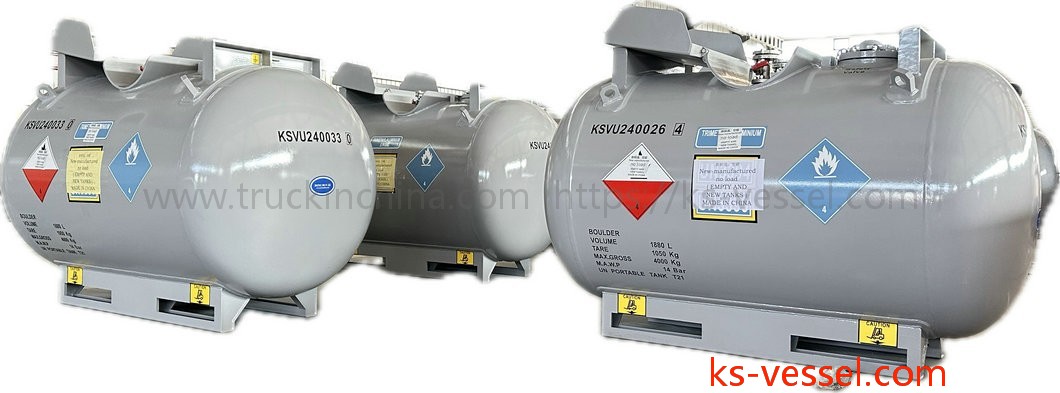
CHEMICAL NAME | ACRONYM | MOLECULAR FORMULA | CAS NO. | EINECS/ELINCS NO. |
n-Butylethylmagnesium | MAGALA BEM | n-C₄H₉MgC₂H₅ | 62202-86-2 | 263-454-0 |
Di-n-butylmagnesium | MAGALA DNBM | (n-C₄H₉)₂Mg | 1191-47-5 | 214-736-7 |
Boron Alkyls catalyst Cylnders /Tanks
CHEMICAL NAME | ACRONYM | MOLECULAR FORMULA | CAS NO. | EINECS/ELINCS NO. |
Triethylborane | TEB | (C₂H₅)₃B | 97-94-9 | 202-620-9 |
Zinc Alkyls catalyst Cylnders /Tanks
CHEMICAL NAME | ACRONYM | MOLECULAR FORMULA | CAS NO. | EINECS/ELINCS NO. |
Dimethylzinc | DMZ | (CH₃)₂Zn | 544-97-8 | 208-884-1 |
Diethylzinc | DEZ | (C₂H₅)₂Zn | 557-20-0 | 209-161-3 |

CYLINDER | VOLUME (90% FULL) | DIMENSIONS | |
Diameter | Height | ||
Pyrosafe | 0.85 l (0.225 gal) | 9.0 cm (3.562 in) | 26.7 cm (10.5 in) |
B-2 | 9.8 l (2.59 gal) | 23.2 cm (9.125 in) | 46.4 cm (18.25 in) |
B-5 | 19.6 l (5.18 gal) | 30.8 cm (12.125 in) | 53.3 cm (21 in) |
B-28 | 98.4 l (26.0 gal) | 37.1 cm (14.625 in) | 129.5 cm (51 in) |
B-118 | 405 l (107 gal) | 76.2 cm (30.0 in) | 145.7 cm (57.4 in) |

PORTABLE TANK | VOLUME (90% FULL) | DIMENSIONS | ||
Length | Diameter | Height | ||
C-250 | 829 l (219 gal) | 208 cm (82 in) | 81 cm (32 in) | 96.5 cm (38 in) |
C-430 dome type | 1,465 l (387 gal) | 208 cm (82 in) | 107 cm (42 in) | 122 cm (48 in) |
C-430 saddle type | 1,465 l (387 gal) | 208 cm (82 in) | 107 cm (42 in) | 128 cm (50.5 in) |
C-480 saddle type | 1,692 l (447 gal) | 219.6 cm (86.4 in) | 110 cm (43.3 in) | 130.5 cm (51.4 in) |
C-1980 | 6,745 l (1,782 gal) | 305 cm (120 in) | 190 cm (74.8 in) | 224 cm (88.2 in) |
ISO 20ft | 19,200-21,150 l (5,068-5,584 gal) | 606 cm (239 in) | 244 cm (96 in) | 259 cm (102 in) |

Both UN 3394 and UN 3399 are compatible with T21 portable tank containers for transporting water-reactive, pyrophoric organometallic liquids (e.g., triethylaluminum, diethylaluminum chloride). Classified as UN Class 4.2 dangerous goods, they fall under Packing Group I (high hazard), requiring nitrogen blanketing, strict water prohibition, and compliance with IMDG/ADR/RID/49CFR regulations.
Keystone Vessel Specializing - Industrial Gas Cylinders| ISO Tank| Pressure Vessel| UN Portable Tanks-


