
Views: 2025 Author: Keystone Vessel (Wuhan) Publish Time: 2026-01-05 Origin: Keystone Vessel (Wuhan)
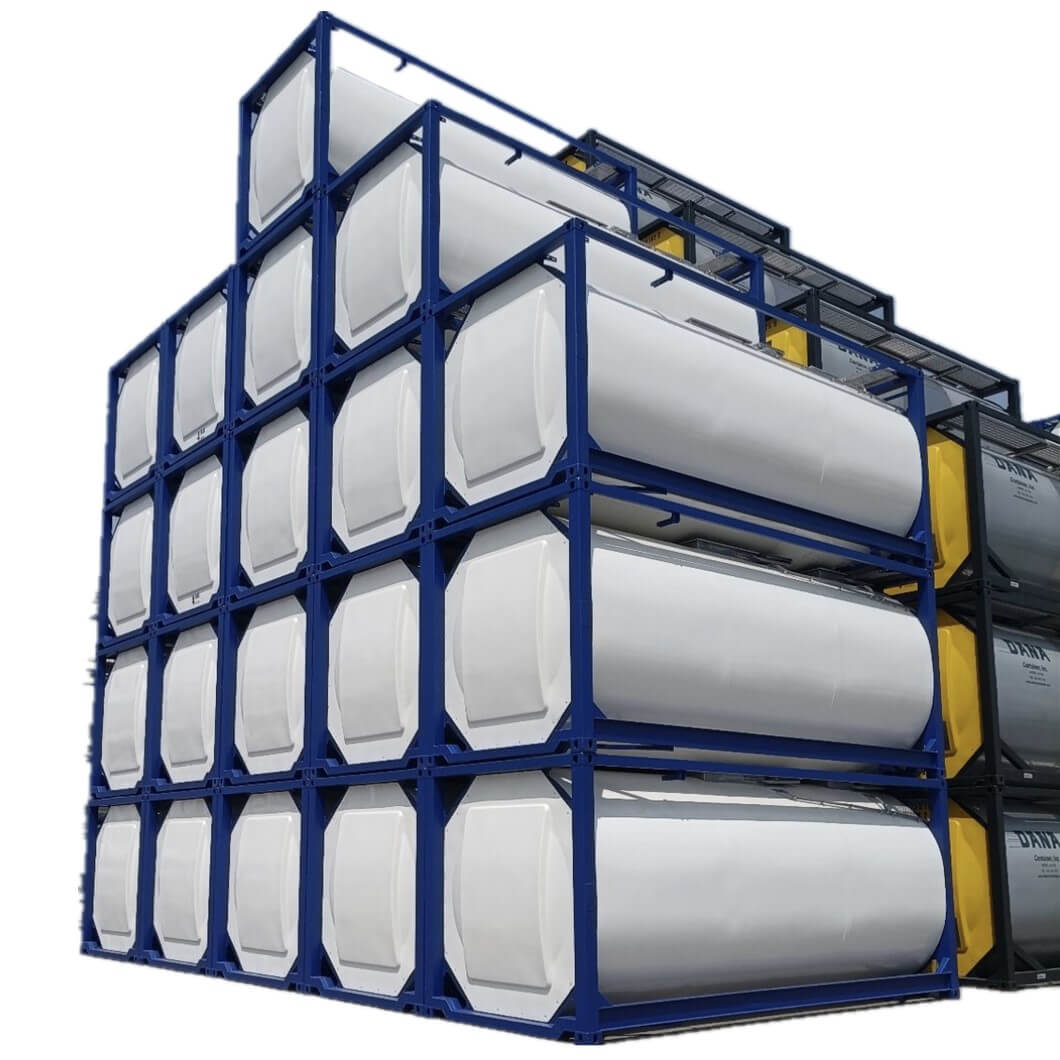
Keystone Vessel 930L P200 Type Stainless Steel Gas Cylinders for ADR Specialty Gase
ADR/RID/IMDG 930L
Specifications – Portable without frame:
Capacity: 930 L
Diam.: 860 mm
Length : 2350 mm
Material: SS 304
Manhole opening: 240 mm
Liquid and gas valves: 1″1/4
Tare weight: 690 kg
Max gross weight: 2180 kg
Max working pressure: 28 bar
Test pressure: 42 bar
Approval: P200
ADR/RID/IMDG UN Pressure Receptacle Certificate of Compliance
Certificate No.: CDG-C-KSV 001-24-CHN
Bureau Veritas Services SAS, acting within the scope of its delegation received from the competent authority, attests that:
Equipment Details
• Item: 930L Stainless Steel Gas Cylinders 、 Pressure Drum
• Description: OD840XNT10XLEGH2330 PW28 PH42BAR (Shell: min 7.8mm/Head: min 8.0mm)
• Type-Approval Certificate No.: CDG-T-KSV 001-24-CHN
• Issued by: Bureau Veritas Services SAS (0062)
Safety Guidelines for Keystone Vessel P200 Type Stainless Steel Portable Tank Cylinder (930L)

The Keystone Vessel P200 type 930L stainless steel portable tank cylinder is a large-capacity storage and transportation equipment that complies with international and domestic mobile pressure vessel standards. It is integrally formed of high-quality stainless steel, featuring both large-capacity storage capability and flexible mobility, and can realize the safe storage and cross-scenario transfer of industrial gases, chemical media, food and pharmaceutical raw materials and other supplies. This guideline is formulated in strict accordance with standards such as the "Safety Technical Supervision Regulations for Mobile Pressure Vessels" (TSG 22) and GB 150 "Pressure Vessels", covering the core technical parameters, manufacturing certification, applicable scenarios, safe operation and maintenance specifications of the equipment, and providing comprehensive technical support for the compliant selection and safe operation of the equipment.
I. Core Technical Specifications
Parameter Items | Technical Requirements |
Equipment Model | |
Nominal Volume | 930L (Actual Water Volume: 950±8L, calculated according to the design drawing dimensions, rounded after deducting the volume of internal permanent internals) |
Main Material | Normal Working Conditions: 304 Stainless Steel (06Cr19Ni10), carbon content ≤ 0.08%; Corrosive Medium Working Conditions: 316L Stainless Steel (022Cr17Ni12Mo2), carbon content ≤ 0.03%, containing 2%-3% molybdenum to improve chloride ion corrosion resistance; Special strong corrosive working conditions can be customized with special materials such as Hastelloy |
Design Pressure | 0.1-1.6MPa (0.6MPa for normal working conditions, customizable up to 1.6MPa for high-pressure working conditions; all pressure markings are gauge pressure) |
Test Pressure | Hydraulic Test: 1.5 times the design pressure; Air Tightness Test: Equal to the design pressure, helium leak test leak rate ≤ 1×10⁻⁹ Pa·m³/s |
Design Temperature Range | -40℃ ~ 65℃, suitable for most storage and transportation environments in temperate and subtropical zones; high-temperature resistant materials can be customized for high-temperature medium scenarios |
Main Structure and Thickness | Horizontal cylindrical structure, the cylinder body and head are integrally welded and formed; the thickness of the cylinder body ≥ 8mm, the thickness of the head ≥ 10mm, and the corrosion allowance ≥ 2mm to ensure structural strength and corrosion resistance life |
Equipment Dead Weight | 304 Material: About 554-690kg; 316L Material: About 550-690kg (slightly fluctuating with pressure level and material differences) |
Sealing and Interface | Adopting double sealing structure of metal seal + PTFE gasket; the valve is a bellows-sealed valve or diaphragm valve to prevent medium leakage; the interface adopts ISO quick-installation chuck type or CGA international standard interface, suitable for different loading and unloading scenarios |
Safety Accessories | Standard configuration includes safety valve (opening pressure = 1.1 times the design pressure), precision pressure gauge (accuracy class ≥ 1.6), rupture disc (overpressure emergency protection), liquid level gauge (static pressure type/ultrasonic type optional); additional air respirator, CIP cleaning port and SIP sterilization port are equipped for food and pharmaceutical scenarios |
Mobility and Fixation | Equipped with a reinforced mobile chassis and 4 sets of anti-skid and wear-resistant rollers; special lifting lugs are set on the top and traction handrails on the side, supporting forklift handling, crane hoisting and manual pushing; it can be fixed by the chassis locking device during transportation to prevent shaking and collision |
Appearance Treatment | The inner surface is mirror polished (Ra ≤ 0.28μm) to reduce medium residue and microbial growth; the outer surface is sub-polished or cold-rolled primary color sub-polished, and anti-corrosion and anti-rust coating can be sprayed according to requirements |
II. Keystone Vessel Manufacturing Standards and Certification Requirements
1. Core Manufacturing Standards
• Domestic Standards: Strictly follow the "Safety Technical Supervision Regulations for Mobile Pressure Vessels" (TSG 22), GB 150 "Pressure Vessels", JB/T 4735 "Steel Welded Atmospheric Pressure Vessels"
• International Standards: Comply with the relevant requirements of ISO 11119 series (portable cylinder standards), IMDG Code (International Maritime Dangerous Goods Code), IATA (International Air Transport Association), suitable for cross-border transportation
• Manufacturing Process: The main body adopts seamless forming and automatic welding technology, and the welds are subjected to 100% non-destructive testing (RT/UT); the inner wall is electrolytically polished + passivated to restore the integrity of the passivation film and improve corrosion resistance
2. Mandatory Certification and Factory Inspection
• Qualification Requirements: The manufacturing unit must have a Special Equipment Manufacturing License (TS Certification); export equipment must additionally provide CE (EU), DOT (US) and other target market certifications
• Material Control: The main material must provide a quality certificate; materials with foreign grades must undergo verification and re-inspection of chemical composition and mechanical properties before they can be put into production
• Factory Inspection: Each unit shall complete hydraulic test, air tightness test, dimensional accuracy inspection, appearance quality inspection and non-destructive testing, and provide a complete factory inspection report and risk assessment report
III. Applicable Media and Scenarios
1. Media Adaptation Requirements (Divided by Material)
• 304 Stainless Steel: Suitable for weakly corrosive and chloride-free ion media, such as drinking water, food raw materials (milk, fruit juice), neutral organic solvents (ethanol, acetone), inert gases (nitrogen, argon), etc.; strictly prohibited for media containing chloride ions or strong oxidants
• 316L Stainless Steel: Suitable for media containing low-concentration chloride ions (seawater, chloride solution below 5%), weakly acidic solutions (acetic acid, citric acid), electronic specialty gases (silane, boron trifluoride), pharmaceutical intermediates, etc.; when the chloride ion concentration exceeds 200ppm, additional PTFE coating treatment on the inner wall is required
• Prohibited Media: Strongly corrosive media such as concentrated hydrochloric acid, sodium hypochlorite, fluoride, etc., which can only be used with customized special materials
2. Typical Application Scenarios
• Industrial Production: As a temporary storage equipment in the workshop, providing large-capacity gas/liquid raw material supply for the chemical, electronic and metallurgical industries
• Food and Pharmaceutical: Storing food-grade raw materials (edible oil, fruit juice), pharmaceutical intermediates and purified water, meeting GMP hygiene standard requirements
• Logistics and Transportation: Complying with dangerous goods transportation regulations, it can realize cross-regional long-distance transportation by road, railway and sea container, or point-to-point short-distance transfer in the factory area
• Emergency Support: Used for the reserve and transfer of emergency supplies (such as medical oxygen, fire-fighting agents) in natural disasters and production accidents
IV. Safe Operation Specifications
1. Storage Safety Requirements
• Environmental Control: Place in a dry, ventilated and cool special warehouse, away from open flames and heat sources (safety distance ≥ 15m), avoiding direct sunlight; warehouse temperature ≤ 30℃, relative humidity ≤ 70%; humidity ≤ 30% is required for storing corrosive media
• Placement Specifications: Place vertically or horizontally and fixed with special brackets to prevent tipping; tank cylinders with different properties of media shall be stored separately (spacing ≥ 5m), and mixed storage is strictly prohibited to avoid chemical reactions; the valve port shall face the direction where no personnel pass
• Protective Measures: The warehouse is equipped with gas detection and alarm devices, dry powder/carbon dioxide fire extinguishers; when storing volatile and flammable media, additional flame arresters and breathing valves are installed to prevent abnormal pressure in the tank and flame intrusion
2. Transportation Safety Operations
• Transportation Qualification: Use special vehicles with dangerous goods transportation qualifications, and drivers and escorts must hold valid qualification certificates; the vehicles are equipped with static eliminators, grounding chains and emergency fire-fighting equipment
• Loading and Fixing: The tank cylinder is firmly fixed to the vehicle through the chassis locking device, and the gap is filled with buffer pads to avoid vibration and collision during transportation; the valve is equipped with a protective cap, the interface is well sealed, and clear dangerous goods signs and UN number labels are posted
• Route and Environment: The transportation route avoids densely populated areas such as residential areas, schools and hospitals; shade and cool down in summer, prevent freezing and keep warm in winter, and transportation under extreme temperatures (exceeding the design temperature range) is strictly prohibited

3. Loading, Unloading and Usage Operations
• Preliminary Inspection: Before use/loading and unloading, confirm that the equipment is within the inspection validity period, the appearance is free of deformation and cracks, and the safety accessories are intact and effective; check the compatibility between the medium and the equipment material, and strictly prohibit wrong loading and overloading (maximum loading capacity ≤ 80% of the nominal volume)
• Loading and Unloading Control: Control the medium loading and unloading flow rate (liquid ≤ 2m/s) to avoid static electricity generated by high-speed flow; extend the feed pipe to the bottom of the tank or install an anti-impact baffle to prevent the medium from impacting the tank wall and damaging the passivation film; monitor the pressure and temperature in real time during loading and unloading, and stop immediately if there is an abnormality
• Personal Protection: Operators wear safety helmets, protective gloves, protective glasses and other equipment; when contacting corrosive media, additional chemical protective clothing and positive pressure air respirators are equipped
• Post-Use Treatment: Close the valve, purge the residual medium at the interface, and seal the port with a special plug; record the usage amount and residual pressure, transport the equipment back to the special storage area, and do not store it at the use site for a long time
V. Maintenance and Regular Inspection
1. Daily Maintenance Points
• Cleaning and Maintenance: Regularly wipe the equipment surface with absolute ethanol or neutral detergent to remove dust, oil stains and corrosion residues; the internal surface cleaning cycle is formulated according to the medium characteristics; for food and pharmaceutical scenarios, CIP online cleaning is required after each use, and dry after cleaning to ensure no moisture residue
• Sealing and Valve Maintenance: Check the flexibility of the valve switch weekly and apply special grease regularly; check whether the sealing ring is aging and deformed monthly, and replace the failed parts in time; it is strictly prohibited to disassemble the safety accessories and valves without authorization
• Idle Protection: For equipment that has been idle for more than 3 months, fill it with 0.2-0.5MPa inert gas for protection; check the pressure change monthly to ensure no leakage; for long-term idle, regular ventilation and drying are required to prevent internal wall oxidation and rust
2. Regular Inspection Requirements
• Inspection Cycle: A comprehensive inspection shall be carried out every 5 years after the first inspection; equipment with a service life exceeding 15 years shall be inspected every year; inspection shall be carried out in advance if collision, overpressure, medium corrosion, etc. occur
• Inspection Items: Including hydraulic test, air tightness test, wall thickness measurement (focus on testing corrosion-prone parts such as tank bottom and interface), weld non-destructive testing, safety accessory calibration, etc.
• Scrapping Standards: Equipment whose tank wall thickness is reduced by more than 10% of the design value, has irreparable cracks or leaks, whose safety accessories are invalid and cannot be calibrated, and which has reached the design service life (usually 20 years) shall be compulsorily scrapped
3. Scrap and Disposal
• Scrapped cylinders must be purged with inert gas and the medium must be harmlessly treated by professional institutions to ensure no residual dangerous substances inside
• It shall be handed over to a unit with dangerous waste disposal qualifications for cutting, recycling or destruction; an scrap account shall be established to record the reason for scrapping, disposal time and institution, and the account retention period shall not be less than 5 years
VI. Emergency Disposal Measures
1. Medium Leakage Disposal
• Immediately isolate the leakage area, set up warning signs, and evacuate irrelevant personnel to the upwind safe area; cut off the leakage source and close the valve; if the valve cannot be closed, temporarily block it with special plugging tools
• When the leaked medium is gas, dilute and disperse it with inert gas; when it is liquid, collect it into a corrosion-resistant container and strictly prohibit direct discharge; take neutralization measures according to the medium characteristics (alkaline absorbent for acidic medium, acidic absorbent for alkaline medium)
2. Personal Injury Emergency
• Inhalation Poisoning: Quickly transfer the patient to a place with fresh air, keep the respiratory tract unobstructed, give oxygen support if necessary, and send to the hospital immediately
• Skin Contact: Immediately take off contaminated clothing, rinse the contact area with a large amount of flowing water for ≥ 15min, and apply special ointment before sending to the hospital if burns occur
• Eye Contact: Separate the eyelids, rinse with flowing water or normal saline for ≥ 10min, avoid rubbing, and send to the hospital for treatment in time
3. Fire and Overpressure Emergency
• Fire Disposal: Immediately cut off the gas source, put out the fire with dry powder or carbon dioxide fire extinguisher, and strictly prohibit directly extinguishing gas fire with water; spray cooling water on the tank body to cool down, prevent sudden pressure rise caused by high temperature and explosion; immediately evacuate and call the fire department if the fire is out of control
• Overpressure Disposal: When abnormal pressure rise is found, immediately stop loading, unloading and use operations, and open the emergency pressure relief device; investigate the cause of overpressure, and resume use only after the pressure returns to normal and hidden dangers are eliminated
VII. Supplementary Notes
This guideline applies to the selection, use, maintenance and management of P200 type 930L stainless steel portable tank cylinders; special media or customized equipment shall be implemented in conjunction with special technical documents; 2. A complete use account shall be established for equipment operation, recording the filling medium, use time, inspection status and other information, and the account retention period shall not be less than 5 years; 3. Operators must receive professional training and be familiar with the equipment characteristics and operating procedures before taking up their posts.

KSC930L Welded Stainless Steel Gas Cylinders
Product Model :KSC930L
Material:316L、304、SA-516
Volume:930L
Common Volume:150L、210L、250L、450L、550、760L、860L、930L、1000L
Certification Medium:P200、P400、P800……
Optional Certificate:TS、UN、TPED/ADR、DOT
Work Pressure:0.1MPa-10MPa
Keystone Vessel Specializing - Industrial Gas Cylinders | ISO Tank | Pressure Vessel | UN Portable Tanks


