
Views: 2025 Author: Keystone Vessel (Wuhan) Publish Time: 2024-12-06 Origin: Keystone Vessel (Wuhan)
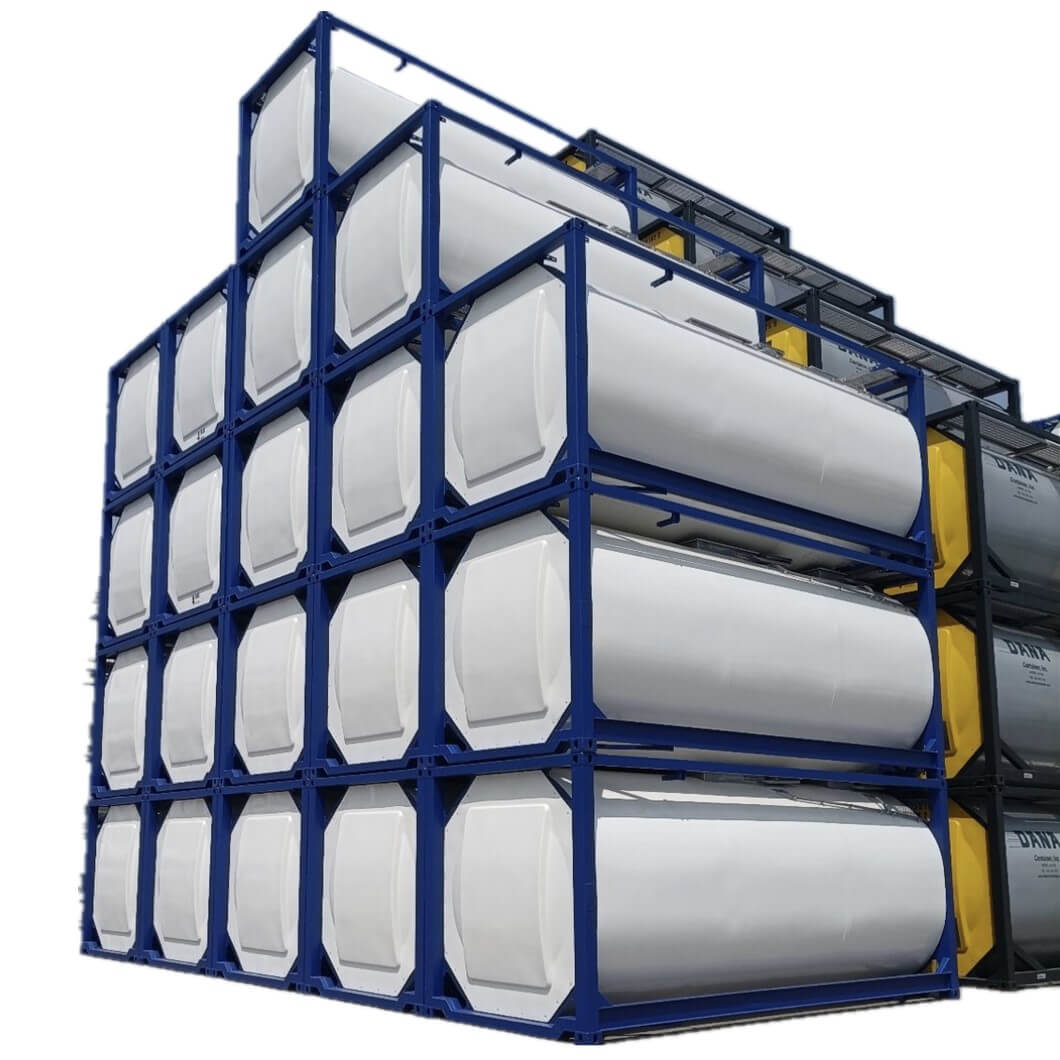
240PCS Stainless Steel Cylinders for High-Purity Electronic Specialty Gases Ready for Delivery
High-purity Dichlorosilane Gas Cylinders
High-purity Cylinders
KSC10L Specialty Gas Cylinders
Product Model :KSC10L
Volume:10L
Operating Temperature:-40~65℃
Certification Medium:DCS、UN2189、UN2196……Electronic Specialty Gases
Optional Certificate:TS、UN、TPED、DOT
Work Pressure:2.2MPa
Helium Leak Detection Rate:≤1X10⁻⁹ pa.m³/s
Polishing Grade:EP,Ra0.07-0.25um

KSC40L Specialty Gas Cylinders
Product Model :KSC40L
Volume:40L
Operating Temperature:-40~65℃
Certification Medium:DCS、WF6、HF、STC……Electronic Specialty Gases
Optional Certificate:UN
Work Pressure:2.0MPa
Product Description:Standard Operating Procedure is ASME Ⅷ Div.1 ISO 18172-1 IMDGCODE TSG23 GB/T 32566
Safety Use and Management Specifications for Stainless Steel Gas Cylinders of Electronic Specialty Gases
Keystone Vessel Electronic specialty gases are core raw materials in high-tech fields such as semiconductors, photovoltaics, and microelectronics. The core carrier for their storage and transportation is dedicated stainless steel gas cylinders. Such cylinders must meet stringent requirements of high purity, low adsorption, corrosion resistance, and zero leakage to ensure gas purity and operational safety. The following is a full-lifecycle safety management specification covering cylinder selection, preparation, storage, transportation, use, and maintenance.
Keystone Vessel Stainless Steel Cylinders for High-Purity Electronic Specialty Gases
High-purity electronic specialty gases are critical raw materials in semiconductor, photovoltaic, and microelectronic manufacturing processes. The stainless steel cylinders used for their storage and transportation must meet stringent requirements of high cleanliness, low adsorption, corrosion resistance, and zero leakage to ensure the purity of the gases and the safety of the production process. This document specifies the core technical requirements, manufacturing standards, and full-lifecycle safety management norms for such cylinders.
1. Core Material Requirements
1.1 Material Selection
• The cylinder body shall be made of 316L stainless steel (UNS S31603) or Hastelloy C-276 (UNS N10276) as the primary material. The carbon content of 316L stainless steel shall not exceed 0.03%, and the content of sulfur and phosphorus impurities shall be ≤ 0.015% to minimize metal ion precipitation and ensure corrosion resistance against aggressive electronic specialty gases (such as halides, hydrides, and fluorides).
• Ordinary stainless steel materials (e.g., 304 stainless steel) are prohibited due to their insufficient corrosion resistance and high impurity content, which may cause cylinder corrosion and gas contamination.
1.2 Inner Wall Treatment
• The inner wall of the cylinder must undergo electropolishing + passivation treatment. The surface roughness Ra shall be ≤ 0.05 μm to reduce gas adsorption and the retention of impurity particles, ensuring compliance with the cleanliness requirements of electronic specialty gases with purity ≥ 99.999% (5N).
• After polishing, ultra-high-purity cleaning shall be performed using ultrapure water (resistivity ≥ 18.2 MΩ·cm) and electronic-grade cleaning agents, followed by vacuum drying (temperature: 120–150℃, vacuum degree ≤ 1 Pa). The moisture content in the cylinder shall be ≤ 5 ppb, and the number of particles with size ≥ 0.1 μm shall be ≤ 10 particles per cylinder.
2. Key Technical Specifications
Parameter Item | Technical Requirements |
Manufacturing Process | Seamless forming process, no welds on the cylinder body, uniform wall thickness (≥ 3 mm for 10 MPa working pressure), in line with GB 5099, ISO 9809, or ASTM E1993 standards |
Pressure Rating | Common maximum allowable working pressure (MAWP): 1.2MPa.1.8MPa,2.2MPa,10 MPa, 15 MPa, 20 MPa; design pressure ≥ 1.5 × MAWP; burst pressure ≥ 3 × MAWP |
Volume Specification | Common volumes: 1L,2L,5L,7L, 10L,40L,47 L, 50 L, 63L,80 L,110L,200L,210L,450L,860L,930; water volume error ≤ ±1% |
Valve Configuration | Corrosion-resistant diaphragm valve or bellows-sealed valve; seal material: PFA, fluororubber, or metal seal; leak rate ≤ 1×10⁻⁹ Pa·m³/s (helium leak test); interface standard: CGA, QF, or DISS (international standard interface) |
Inert Gas Replacement | After manufacturing/cleaning, the cylinder shall be purged with inert gas (N₂ or Ar, purity ≥ 99.999%); oxygen content in the cylinder ≤ 0.1% |
3.Keystone Vessel Manufacturing and Certification Requirements
3.1 Manufacturing Standards
• The cylinder shall be manufactured by enterprises with special equipment manufacturing qualifications. The entire production process (material selection, forming, heat treatment, polishing, cleaning) shall be carried out in a clean environment (Class 1000 or higher clean room) to avoid secondary contamination.
• Key processes (electropolishing, welding of valve interfaces) shall be subject to strict process control and inspection, with complete process records for traceability.
3.2 Certification and Inspection
• Mandatory certifications: ISO 11118 (Refillable Gas Cylinders Standard), SEMI F19 (Semiconductor Gas Container Safety Standard); national certifications (e.g., China's Special Equipment Manufacturing License) and third-party inspection certificates shall be provided.
• Factory inspection items: helium leak test, hydrostatic test, inner wall cleanliness test (particle count, moisture, metal ions), material composition analysis, and dimensional accuracy inspection. All inspection results shall meet the specified requirements, with complete inspection reports attached.
4. Storage and Transportation Safety Management

4.1 Storage Requirements
• Storage Environment: Dedicated warehouse with dry (relative humidity ≤ 30%), cool (temperature: -20℃–25℃), and negative pressure ventilation (air exchange rate ≥ 10 times/hour); explosion-proof grade ≥ Ex d IIBT4; equipped with gas detection alarm (adapted to gas type: toxic, flammable, corrosive) and emergency absorption device.
• Placement Rules: Store upright, fixed with stainless steel brackets/chains; soft pads at contact points to avoid collision; valve openings face the same direction, away from passages/operation areas; separate storage by gas type (flammable, toxic, corrosive, inert) with spacing ≥ 10 meters; clear zoning signs.
• Routine Inspection: Daily inspection of cylinder pressure, valve sealing, and warehouse environment; weekly helium leak test for valve interfaces; monthly inspection of ventilation system, alarm devices, and emergency materials.
4.2 Transportation Requirements
• Transport Vehicle: Special vehicle for dangerous chemicals with corrosion-resistant and anti-static modifications; equipped with temperature control system, satellite positioning system, and fire-fighting/emergency materials (dry powder fire extinguisher, neutralizing agent).
• Loading and Fixing: Cylinders shall be fixed with dedicated brackets, kept upright; valve ports shall be protected with caps; avoid violent vibration, collision, or inversion during transportation.
• Temperature Control: Transport temperature: -10℃–30℃; sunshade/heat insulation in summer, anti-freezing in winter; avoid sunlight and rain.
• Labeling and Documentation: The vehicle shall be affixed with hazard warning signs (consistent with the type of electronic specialty gas); accompanying documents: Safety Data Sheet (SDS), cylinder certification, gas purity report, and dangerous goods transportation documents.
5. Safe Operation Guidelines
5.1 Pre-Operation Preparation
• Operation Area: Inert gas-protected glove box or negative pressure ventilation workshop; equipped with emergency shower/eyewash station (≤ 10 meters from the operation point) and gas detection alarm.
• Personal Protective Equipment (PPE): Wear positive pressure air respirator (for toxic/corrosive gases), PFA chemical protective clothing, fluororubber gloves, and anti-corrosion boots; prohibit wearing chemical fiber clothing (to avoid static electricity).
• Equipment Inspection: Confirm the cylinder is undamaged, the valve is intact; check that connecting pipelines/valves are made of 316L stainless steel or PFA; purge pipelines with inert gas (residual oxygen content ≤ 0.1%) before connection.
5.2 In-Operation Control
• Valve Operation: Open the valve slowly; purge the interface with small flow for 30 seconds to remove residual air, then connect to the system; perform helium leak test after connection, confirm no leakage before supplying gas.
• Flow Control: Strictly control the gas flow rate according to the process requirements; real-time monitor the gas concentration in the operation area; if the concentration exceeds the standard, immediately close the valve, ventilate and replace until it meets the standard, then investigate the leak.
• Prohibited Behaviors: Knocking, colliding, or welding the cylinder; placing the cylinder horizontally or inverted during use; using non-compatible materials (e.g., ordinary plastics) in the connecting system.
5.3 Post-Operation Treatment
• Close the cylinder main valve first, then purge residual gas in the pipeline with inert gas to prevent gas retention or hydrolysis.
• Seal the valve outlet with a dedicated plug; record usage information (use time, dosage, residual pressure); transfer the cylinder to the dedicated storage area (do not store at the operation site for a long time).
6. Maintenance and Periodic Inspection
6.1 Daily Maintenance
• Keep the cylinder surface clean; wipe with anhydrous ethanol regularly to remove dust and corrosive residues; avoid contact with oil, water, or acidic/alkaline substances.
• Check the valve's opening/closing flexibility periodically; if jamming or leakage occurs, repair or replace it by professional personnel (prohibit unauthorized disassembly).
• For cylinders idle for more than 3 months, fill with 0.2–0.5 MPa inert gas for protection; check the pressure monthly to prevent air ingress.
6.2 Periodic Inspection
• Periodic inspection cycle: 5 years (in line with national/international standards); cylinders exceeding the service life (usually 15 years) or failing inspection shall be scrapped immediately.
• Inspection items: hydrostatic test, airtightness test, inner wall cleanliness test, wall thickness measurement, valve calibration. Qualified cylinders shall be affixed with inspection marks before reuse.
6.3 Scrap Disposal
• Scrapped cylinders shall be purged with inert gas by professional institutions, then neutralized (if contaminated by corrosive gases) until they meet the standards; subsequent disposal (cutting, recycling, or destruction) shall be carried out by institutions with hazardous waste disposal qualifications.
• A scrap account shall be established, recording the reason for scrapping, treatment time, and treatment institution; the account retention period shall be no less than 5 years.
7. Application Adaptability for Typical Electronic Specialty Gases
The high-purity electronic specialty gas stainless steel cylinders specified in this document are suitable for storing and transporting various electronic specialty gases, including but not limited to:
• Hydrides: Silane (SiH₄), arsine (AsH₃), phosphine (PH₃);
• Halides: Boron trifluoride (BF₃), tungsten hexafluoride (WF₆), trichlorosilane (SiHCl₃);
• Oxides: Nitrous oxide (N₂O), carbon dioxide (CO₂);
• Inert gases: High-purity argon (Ar), helium (He), nitrogen (N₂).
For special corrosive gases (e.g., WF₆, BF₃), Hastelloy C-276 material is recommended to enhance corrosion resistance; the cylinder's inner wall treatment and valve selection shall be further optimized according to the gas characteristics.
Keystone Vessel Manufacturing Co., Ltd WELDED STAINLESS STEEL CYLINDERS FOR ULTRA-HIGH PURITY MATERIALS (GASES)
Welded Stainless Steel Cylinder For Ultra-High Purity Material (Gas) MO Source: TMGa, TEGa, TMIn, Cp₂Mg, MeCpMg, TMAl, Gallium trichloride, TESb, TDMAS, TMS, TBP, EtCp₂Mg, BTBAS, DEZ, HCDS, Chlorosilanes, TDMAT, TEOS, etc. Precursor: High-K high dielectric constant precursor, Silicon oxide and silicon nitride precursor, Metal and metal nitride precursor Main uses: CVD, ALD, epitaxial growth, etching, doping, cleaning.
MO source stands for metal organic source, which is a high-purity compound composed of metal elements and organic ligands. Its purity directly affects the performance of downstream products, mainly including:
No. | Name | Abbreviation | Molecular Formula or Structural Formula | CAS NO. |
1 | Trimethylaluminum | TMAl | Al(CH₃)₃ | 75-24-1 |
2 | Trisilylamine | TSA | (SiH3)3N | 13862-16-3 |
3 | Trimethylindium | TMIn | In(CH₃)₃ | 3385-78-2 |
4 | Trimethyl Gallium | TMG | Ga(CH₃)₃ | 1445-79-0 |
5 | Triethylgallium | TEG | Ga(C2H5)3 | 1115-99-7 |
6 | Triethylaluminum | TEAl | (C2H5)3Al | 97-93-8 |
7 | Diethylaluminum Ethoxide | DEAlO | (C2H5)2AlOC2H5 | 1586-92-1 |
8 | Triethylamine | TEA | (C2H5)3N | 121-44-8 |
9 | Triethylantimony | TESb | Sb(C₂H₅)₃ | 617-85-6 |
10 | Magnesium Cyclopentadienide | Cp₂Mg | Mg(C₅H₅)₂ | 1284-72-6 |
11 | Ferrocene | Fc | Fe(C₅H₅)₂ | 102-54-5 |
12 | Cyclohexane | — | C₆H₁₂ | 110-82-7 |
13 | Trimethylantimony | — | Sb(CH₃)₃ | 594-10-5 |
14 | Dimethylzinc | — | Zn(CH₃)₂ | 544-97-8 |
15 | Carbon Tetrabromide | — | CBr₄ | 558-13-4 |
16 | Bromotrichloromethane | — | CBrCl₃ | 75-62-7 |
17 | Vanadium Tetrakis(dimethylamide) | TDMAV | V(N(CH₃)₂)₄ | 19824-56-7 |
18 | Hafnium Tetrakis(ethylmethylamide) | TEMAHf | Hf(N(CH₃)(CH₂CH₃))₄ | 352535-01-4 |
19 | Tetrakis(dimethylamino)titanium(IV) | TDMATi | Ti(N(CH₃)₂)₄ | 3275-24-9 |
20 | Diethyltelluride | DETe | CH₃CH₂-Te-Te-CH₂CH₃ | 627-54-3 |
21 | Diethylzinc | DEZ | Zn(C₂H₅)₂ | 557-20-0 |
22 | Antimony Trioxide or Diantimony Trioxide | ATO | Sb₂O₃ | 1309-64-4 |
23 | Tris(dimethylamino)silane | TDMAS | SiH(N(CH₃)₂)₃ | 15112-89-7 |
24 | Tetrakis(dimethylamido)hafnium(IV) | TDMAHf | [(CH3)2N]4Hf | 19782-68-4 |
25 | Tetrakis(dimethylamido)zirconium(IV) | TDMAZr | [(CH3)2N]4Zr | 19756-04-8 |
26 | Tetrakis(ethylmethylamino)zirconium(IV) | TEMAZr | (CH3C2H5N)4Zr | 175923-04-3 |
27 | Tetrakis(dimethylamino)tin | TDMASn | [(CH3)2N]4Sn | 1066-77-9 |
28 | Tris(2,2,6,6-tetramethyl-3,5-heptanedionato)yttrium(III) | Y(TMHD)3 | C33H57O6Y | 15632-39-0 |
29 | Pentakis(dimethylamino)tantalum(V) | PDMAT | (N(CH3)2)5Ta | 19824-59-0 |
30 | Water | DI water | H2O | 7732-18-5 |
31 | Methylmagnesium Cyclopentadienide | MeCpMg | CH₃MgC₅H₅ | 40672-08-0 |
32 | Gallium Trichloride | — | GaCl₃ | 13450-90-3 |
33 | Tetramethylsilane | TMS | Si(CH₃)₄ | 75-76-3 |
34 | tert-Butylphosphine | TBP | (CH₃)₃CPH₂ | 2501-94-2 |
35 | Bis(ethylcyclopentadienyl)magnesium | EtCp₂Mg | Mg(C₂H₅C₅H₄)₂ | 114460-02-5 |
36 | Bis(tert-butylamino)silane | BTBAS | SiH₂(NHC(CH₃)₃)₂ | 186598-40-3 |
37 | Hexachlorodisilane | HCDS | Cl₃Si-SiCl₃ | 13465-77-5 |
38 | Chlorosilanes | — | RₙSiCl₄₋ₙ | 13465-78-6 |
39 | Tetrakis(dimethylamido)titanium | TDMAT | Ti(N(CH₃)₂)₄ | 3275-24-9 |
40 | Tetraethyl Orthosilicate | TEOS | Si(OC₂H₅)₄ | 78-10-4 |
Main uses of MO sources
1. Semiconductor field: chemical vapor deposition (CVD) and other processes, phase change memory, semiconductor lasers, radiofrequency integrated circuit chips, etc.
2. Optoelectronics field: manufacturing of devices, such as light-emitting diodes (LEDs) and laser diodes.
3. 5G communication technology.
4. New energy field: preparation of efficient solar cell materials.
5. Smart devices and Internet of Things (IoT) field.
B. Precursor
Precursor refers to the intermediate material form between raw materials and the final product, requiring conversion through calcination, deposition, or other reactions.
a. Classification of precursors
1. High-K dielectric precursors: Feature thermal stability, process reliability, and volatility to reduce device leakage and improve yield.
2. Silicon oxide / nitride precursors: Used in double lithography and sidewall spacers to protect integrated circuit gate properties.
b. Main application areas of precursors
1. Semiconductor manufacturing
Chemical vapor deposition (CVD), atomic layer deposition (ALD), epitaxial growth, etching, ion implantation doping, cleaning, etc.
Metal and metal nitride precursors are used for capacitor electrodes, gate transition layers, isolation materials in semiconductor storage and logic chips, and phase change materials in phase change memory.
2. Lithium-ion battery
It is composed of nickel, cobalt, manganese (or aluminum), which is processed to form positive electrode materials to improve battery energy density and safety.
3. Other fields
Ceramic / glass: Improve sintering performance.
OLED packaging: Moisture barrier for extended device lifespan.
Keystone Vessel's Advantages:
· Industrial ingot segregation simulation
· Ultra-high purity raw material smelting and purification
· High-purity stainless steel industrial preparation
· High-purity material cold processing
· Custom high-purity material solutions
· Physicochemical surface treatments
· Ultra-low precipitation surface technology
Keystone VesselSpecializing - Industrial Gas Cylinders| ISO Tank| Pressure Vessel| UN Portable Tanks


